Snæfellsnes is often called “Iceland in miniature”: lava fields, black and golden beaches, sea cliffs, a crater you can climb in ten minutes and the glacier volcano Snæfellsjökull, all on one peninsula two hours from Reykjavík. Most people try to do it in a day, and most people run out of light. This plan puts the stops in the order that works, with times for a short winter day and notes on what to add in summer.
Before you start
- Route: Route 1 north through the Hvalfjörður tunnel (free since 2018) to Borgarnes, then Route 54 west along the south coast, Route 574 around the tip of the peninsula, and back over the Vatnaleið pass (Route 56) to Route 54 and Borgarnes.
- Roads: the main loop is paved, with a few gravel stretches. In winter Route 54, Route 574 and the Vatnaleið pass can close in storms, so check umferdin.is and the wind on vedur.is the evening before and in the morning. Gusts under the mountains are the main danger, not snow.
- Daylight on the peninsula (our calculation): 10:20–16:20 on 18 November, 11:40–15:25 on 21 December, 11:10–16:20 on 15 January and 09:35–18:05 on 15 February.
- Fuel and food: fill up in Borgarnes. After that, fuel and shops are mainly in Ólafsvík, Hellissandur and Grundarfjörður, and some cafés close for the winter.
Any rental car will do on the main loop. Not got one yet? We recommend Reykjavik Cars and, for campervans, Motorhome Iceland. More options on our car rental page.
The day, stop by stop (winter timing)
07:30 Reykjavík → 08:40 Borgarnes
About 75 km in the dark. Fuel, coffee and toilets in Borgarnes; it’s the last big stop for two hours.
10:00 Ytri Tunga: seals on the rocks (30 min)
A small beach where harbour seals and sometimes grey seals rest on the rocks offshore. They’re easiest to see at low tide, and most reliable from June to August; in winter you may see only a few, or none (Guide to Iceland, October 2026). Keep at least 50 m away and never walk between a seal and the sea. Parking is 650 ISK on checkit.is (Happy Campers, October 2026).
10:45 Búðir: the black church (20 min)
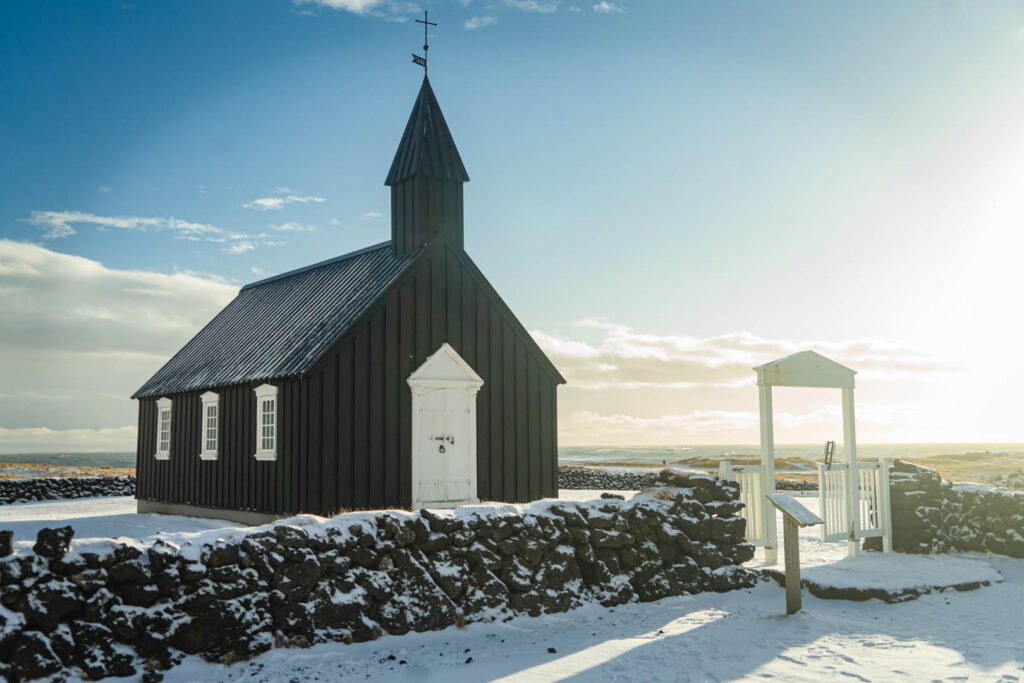
Búðakirkja stands alone in the lava field at the edge of a golden beach, with Snæfellsjökull behind it on a clear day. It’s a short walk from the car park. Free parking.
11:15 Arnarstapi and the cliff walk to Hellnar (60–75 min)
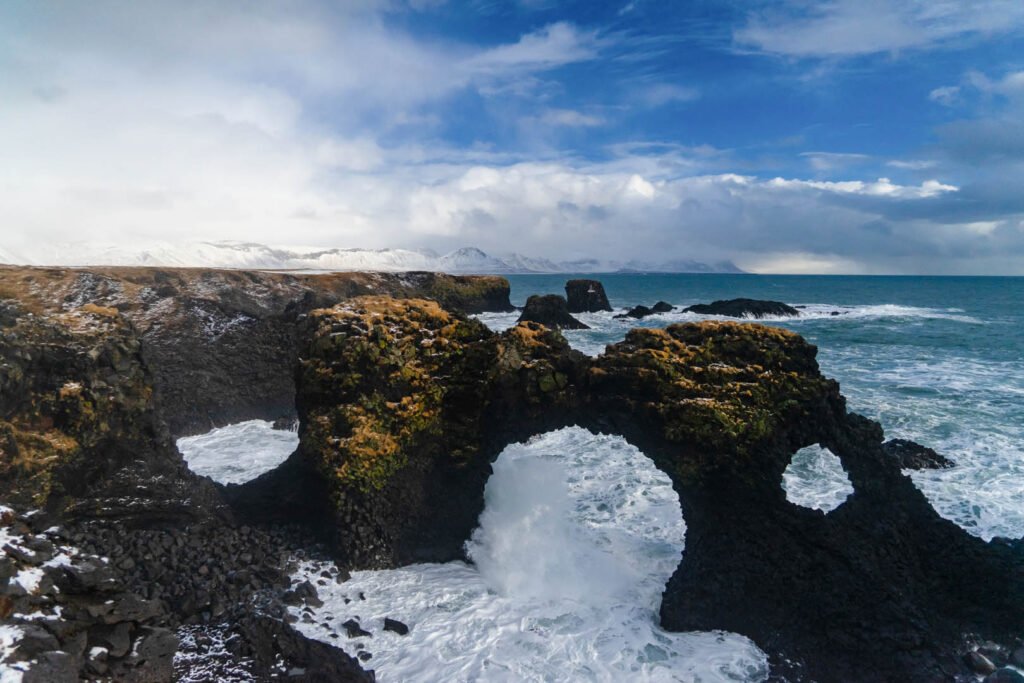
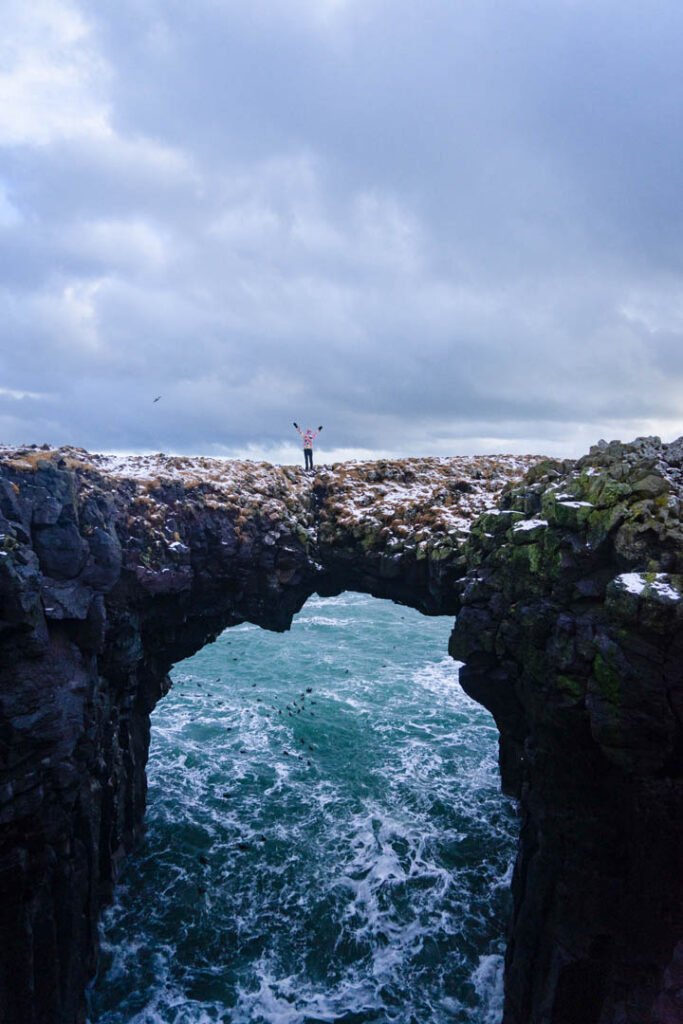
The highlight of the south coast: basalt cliffs, sea caves and the Gatklettur arch, a few minutes’ walk from the free car park by the harbour. If you have time, follow the coastal path towards Hellnar (about 2.5 km each way) and turn back when you need to. The cliff edges have no fences and can overhang, so stay on the path, especially in wind.
12:45 Malarrif and Lóndrangar: pay the park fee (20 min)
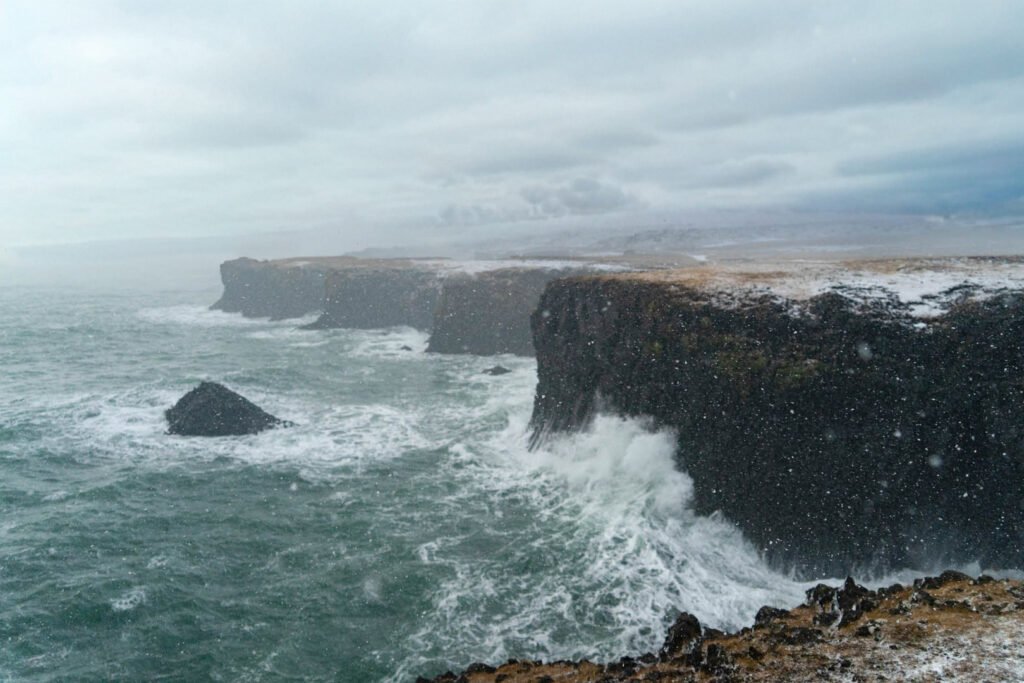
From here you’re in Snæfellsjökull National Park. Since August 2026 the park charges a service fee of 1,100 ISK per car (up to 5 people), valid until midnight. Pay at the kiosk at the Malarrif visitor centre or in the Parka app (Happy Campers). The two Lóndrangar rock pillars, old volcanic plugs, are a short walk from Malarrif.
13:15 Djúpalónssandur: the black pebble beach (45 min)
A 10-minute walk through lava leads to a beach of round black pebbles. On the way you pass four old lifting stones, from 23 to 154 kg, once used to test fishermen’s strength, and rusty pieces of the British trawler Epine, wrecked here in March 1948 (Iceland Spirit). Leave the metal where it lies. This is open Atlantic: keep well back from the waterline, as big waves run far up the beach.
14:15 Saxhóll: a crater in ten minutes (20 min)
A steel staircase leads up the side of a small scoria crater by Route 574. From the rim you look over the lava fields to the glacier. In winter the steps can be icy, so hold the rail.
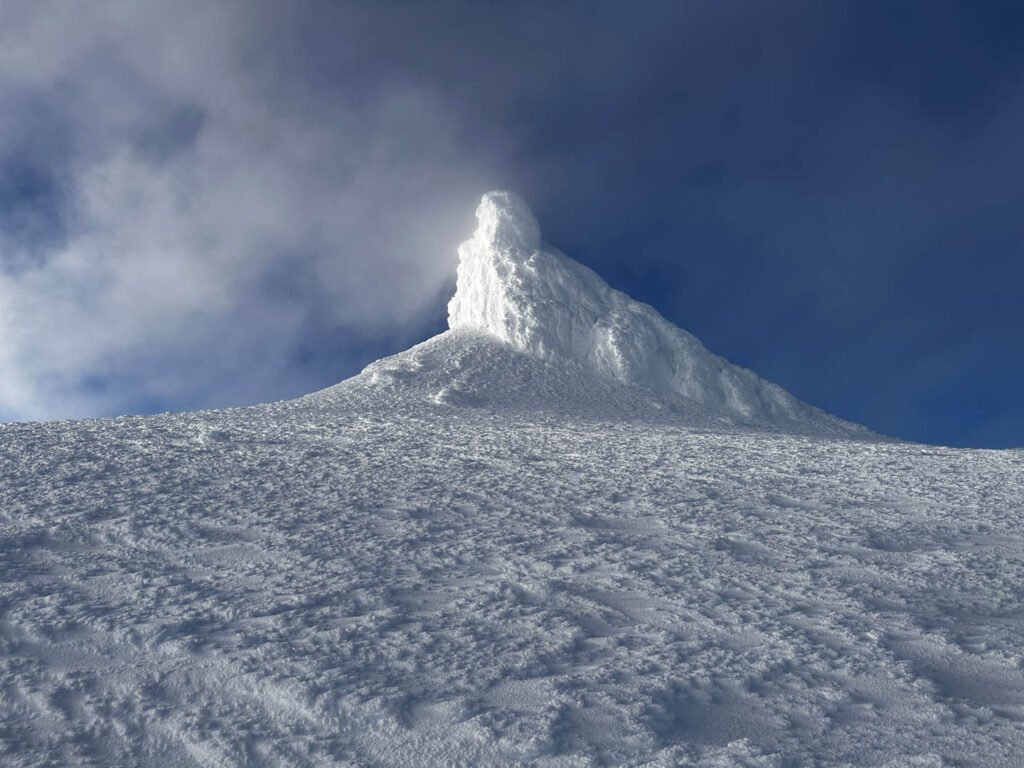
15:15 Kirkjufell and Kirkjufellsfoss: sunset (30 min)
Past Ólafsvík, Route 54 brings you to Kirkjufell, the most photographed mountain in Iceland, with the small Kirkjufellsfoss waterfall across the road. The car park is about 2 km west of Grundarfjörður and charges about 1,000 ISK, paid by camera through EasyPark or Parka (sources give 700–1,400 ISK, so check the sign). Don’t try to climb the mountain: after several fatal falls, the landowners close it to hikers in winter (Iceland Travel Guide, November 2026).
16:00 Back to Reykjavík (about 3 hours)
Take Route 56 over the Vatnaleið pass to Route 54 and Borgarnes, about 180 km to Reykjavík. If the pass is closed or the wind is strong, drive the longer way round on Route 54. This is the tiring part: dark, often icy, after a full day. Take a break in Borgarnes and swap drivers if you can.
In summer: what to add
- Start later and stay longer. From May to August you have light almost all day, so the same plan fits without hurrying.
- Time Ytri Tunga for low tide and you have the best chance of seals.
- Vatnshellir lava cave: guided tours only, about 45 minutes, about 3,000 ISK for adults (Iceland Spirit). Book ahead.
- Skarðsvík beach and Svörtuloft lighthouse at the western tip, on short side roads off Route 574.
- Snæfellsjökull summit: the glacier has hidden crevasses and the climb is only done with a guide. See our tour below.
When to take a certified guide
The road loop is a self-drive day, and you can do it on your own. A guide makes sense when:
- You don’t want to drive 470 km in winter. Most of the return is in the dark, with strong gusts under the mountains.
- You want to go higher. Snæfellsjökull is a glacier with crevasses, and Kirkjufell is closed to hikers in winter. Both need a certified guide and the right gear.
- You want the stories. Our guides explain the lava, the sagas and the fishing villages stop by stop, and know where the seals are that week.
Snæfellsnes with Zimno
- Snæfellsnes Peninsula Private Tour: about 11 hours with hotel pickup at 9:00, by SUV (up to 4) or van (up to 15). Arnarstapi, Búðir, Djúpalónssandur, a crater, seals and Kirkjufell, with parking fees, transport and a photo package (5 photos per person) included. Can be extended with a cave visit or a glacier hike. From 189,000 ISK.
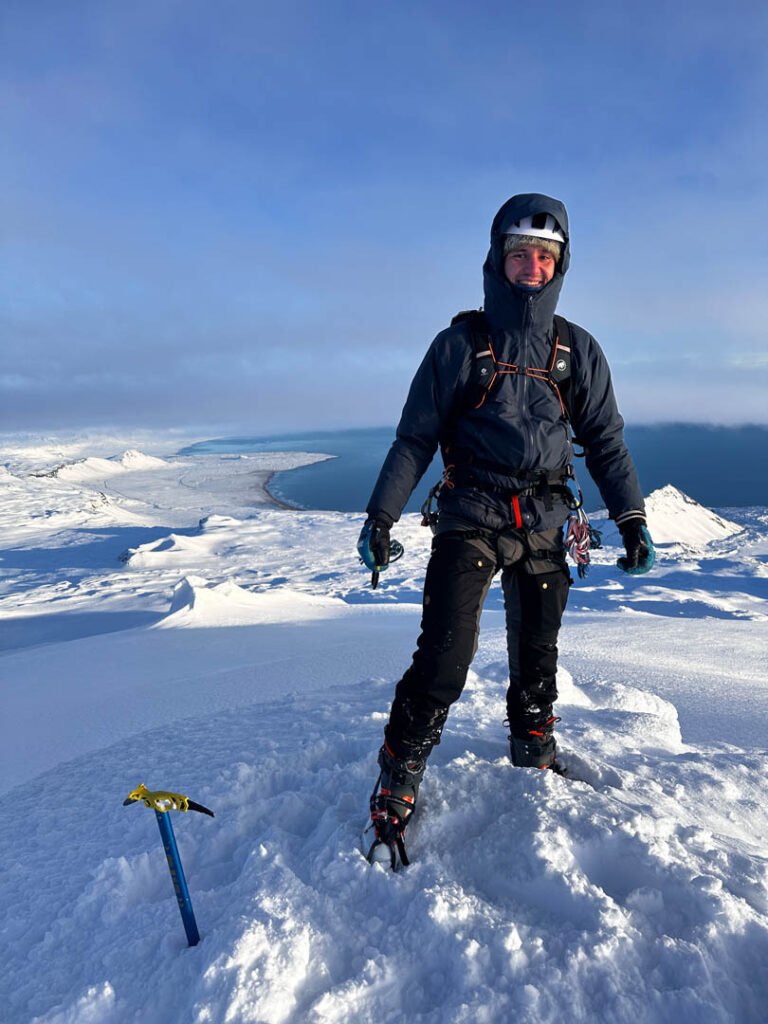
- Snæfellsjökull Summit, meeting in Arnarstapi: a private guided climb for up to 6, 7–10 hours, with crampons, ice axe, harness and helmet included.
Every tour can be guided in English or in Polish. See all our tours.
Before you go: a 1-minute checklist
- Check Routes 54, 56 and 574 on umferdin.is and the wind on vedur.is
- Leave Reykjavík by 07:30 in winter; fill the tank in Borgarnes
- Have the Parka, EasyPark and checkit.is options ready for three paid car parks
- Pack food and a hot drink: some cafés close in winter
- Shoes with grip or microspikes for icy paths and steps
- Stay on the path at Arnarstapi and back from the water at Djúpalónssandur
- Drive home before you’re tired, and stop in Borgarnes
The day at a glance
| Stop | Winter time | Time there | Parking (ISK) |
|---|---|---|---|
| Borgarnes | 08:40 | 15 min | Free |
| Ytri Tunga (seals) | 10:00 | 30 min | 650 (checkit.is) |
| Búðir church | 10:45 | 20 min | Free |
| Arnarstapi and cliff walk | 11:15 | 60–75 min | Free |
| Malarrif and Lóndrangar | 12:45 | 20 min | 1,100 park fee, valid all day |
| Djúpalónssandur | 13:15 | 45 min | Inside the national park |
| Saxhóll crater | 14:15 | 20 min | Inside the national park |
| Kirkjufell and Kirkjufellsfoss | 15:15 | 30 min | About 1,000 (EasyPark or Parka) |
| Back in Reykjavík | About 19:00 | – | – |
FAQ
Can you see Snæfellsnes in one day from Reykjavík?
Yes, if you start early. The loop from Reykjavík is about 470 km with 6–6.5 hours of driving, so plan an 11–12 hour day. In winter, leave by 07:30 to reach the peninsula at first light.
What is the best order of stops on Snæfellsnes?
Clockwise: Ytri Tunga, Búðir, Arnarstapi, Lóndrangar, Djúpalónssandur, Saxhóll and Kirkjufell, then back over the Vatnaleið pass. You see the south coast in the best light and end at Kirkjufell around sunset.
How much does parking cost on Snæfellsnes?
About 2,750 ISK for the day: 650 ISK at Ytri Tunga, 1,100 ISK for the Snæfellsjökull National Park fee (per car, valid until midnight) and about 1,000 ISK at Kirkjufellsfoss. Búðir and Arnarstapi are free.
Where can I see seals on Snæfellsnes?
At Ytri Tunga on the south coast, best at low tide from June to August. In winter there are fewer. Keep at least 50 m away.
Can I drive Snæfellsnes in winter?
Yes, the main loop is open all year, but gusts and ice can close Routes 54, 56 and 574. Check umferdin.is and vedur.is, and choose a car with good winter tyres.
Can I climb Kirkjufell or Snæfellsjökull?
Kirkjufell is closed to hikers in winter after several fatal falls. Snæfellsjökull is a glacier with crevasses and should only be climbed with a certified guide.