Most guides to winter driving in Iceland are written for people who have never seen snow. This one is for the rest of you: drivers from Central Europe, Scandinavia, Canada or the northern US who know how to brake on packed snow and fit winter tyres every year. You already have the basics. Below are the things that are different here, with the rules and fines that catch experienced drivers out.
What’s different from winter at home
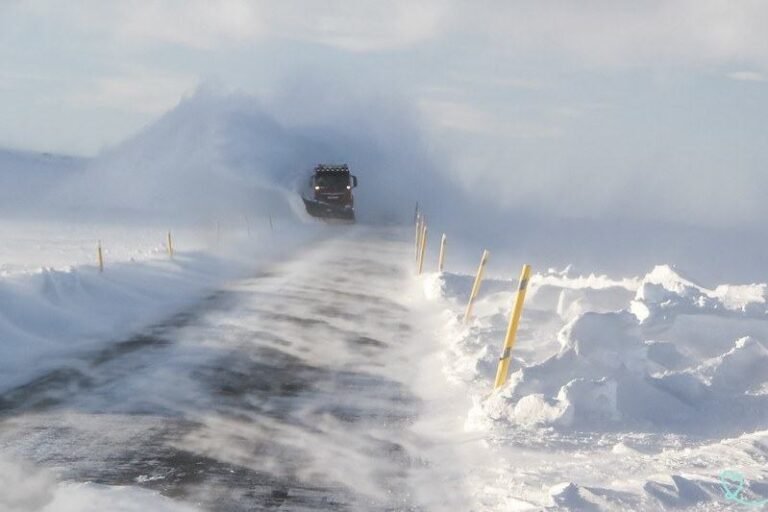
- Wind, not snow, is the main danger. Gusts under mountains and on open coast can push a car off the road or tear a door off its hinges.
- Ice on gravel. Many roads outside the Ring Road are gravel. In winter the gravel is often glazed with ice, and the speed limit is still 80 km/h.
- Darkness. In Reykjavík the sun rises at about 10:27 and sets at about 16:01 on 25 November, and on 21 December it’s up only from about 11:22 to 15:29 (our calculation). You will drive in the dark.
- Long gaps. Outside towns there can be 100 km without fuel, food or phone signal in places. Fuel pumps usually need a card with a PIN (Guide to Iceland, October 2026).
- Roads close. Mountain passes and coastal stretches close in storms, and the road administration means it.
Wind is the real danger
Wind speed in Iceland is given in metres per second. As a rule of thumb, gusts above about 15–20 m/s are a reason to slow down or wait (Guide to Iceland, October 2026). Campervans and high vans feel it first. The forecast map on vedur.is shows wind and gusts; the yellow, orange and red warnings there are for real.
- Open the door with both hands, and park with the front of the car facing into the wind. A gust can bend the hinges in a second, and door damage from wind is usually not covered by standard rental insurance (Guide to Iceland, October 2026).
- Watch for gaps between hills and the ends of tunnels and bridges, where a side gust hits suddenly. Keep both hands on the wheel and your speed down.
- Sand and ash storms on the south coast can strip paint and crack glass. If the forecast says sandstorm, don’t go.
Ice, gravel and darkness
Speed limits are 50 km/h in towns, 80 km/h on gravel and 90 km/h on paved roads, and there is no higher limit anywhere in the country (Map of Iceland, November 2026). In winter, 80 on icy gravel is far too fast; most rental companies suggest 50–60.
- Slow down before the asphalt ends, not after. The change from paved to gravel is where many cars leave the road (Guide to Iceland, October 2026). On gravel, keep to the firmer middle and move right early when a car comes.
- Tyres: rental cars come with winter tyres in winter. Studded tyres are allowed from 1 November to 15 April (Reykjavík City). Ask your rental company whether your car has studs; on sheet ice it makes a big difference.
- Headlights must be on day and night, all year. Driving without them costs 20,000 ISK (Map of Iceland, November 2026).
- Plan the day around the light. Do the long drive in daylight and the short last stretch in the dark, not the other way round. Black ice is hardest to see at dusk.
Bridges, roundabouts, blind hills and animals
These rules confuse experienced drivers more than the snow does (Guide to Iceland, October 2026):
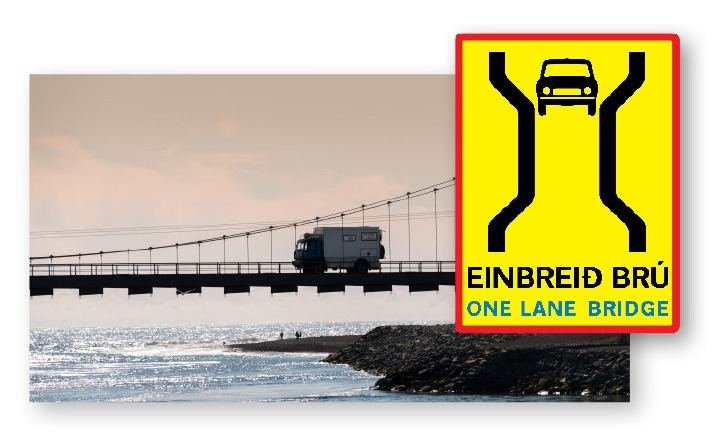
- Single-lane bridges (sign: Einbreið brú): the car closest to the bridge goes first. If the other car will clearly get there first, stop in a safe place and wait. Many bridges on the Ring Road in the south-east are still single-lane, and their decks freeze before the road does.
- Roundabouts: the car in the inner lane has priority when leaving, so a car on your left may cross in front of you to exit. This is the opposite of what many drivers expect.
- Blind hills (sign: Blindhæð): you can’t see oncoming traffic until the top. Slow down and keep right.
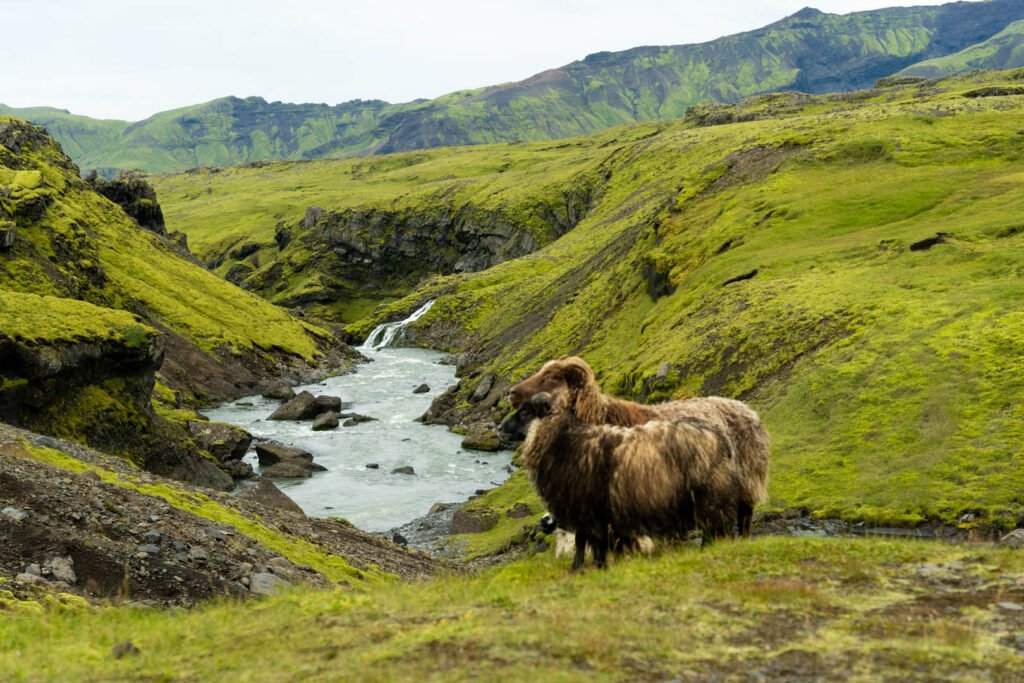
- Animals: sheep roam free from May to October, and in the east reindeer can be on the road all year. If you hit one, report it; the owner must be compensated.
- Never stop on the road for a photo or the northern lights. Pull into a marked parking area.
Closed roads: how to check, and why you must turn back
Before every drive, check the road map on umferdin.is (run by the Icelandic Road Administration; also in English and Polish) or call 1777. Green is clear, white or blue means snow or ice in places, and red means closed. Google Maps may not show closures (Guide to Iceland, October 2026).
Driving past a closed-road sign costs 20,000 ISK (Map of Iceland, November 2026), but the fine is the small part. A closed road breaks most rental terms, so none of your insurance covers damage there, and one rental company lists an extra €1,000 fee (Ring Road Cars, November 2026). If a rescue team has to pull you out, they’re volunteers risking their own safety. Leave a travel plan on safetravel.is, where you also find current alerts and the Safetravel app, and call 112 in an emergency.
Not got a car yet? We recommend Reykjavik Cars and, for campervans, Motorhome Iceland. More options on our car rental page. Every kilometre also costs 6.95 ISK in road fee; see our guide to the real cost of driving in Iceland in 2026.
When a guide makes more sense
Driving the Golden Circle or the South Coast in winter is fine for an experienced driver on a calm day. A guide is worth it when:
- the forecast shows a yellow or orange wind warning and you only have one day for the trip;
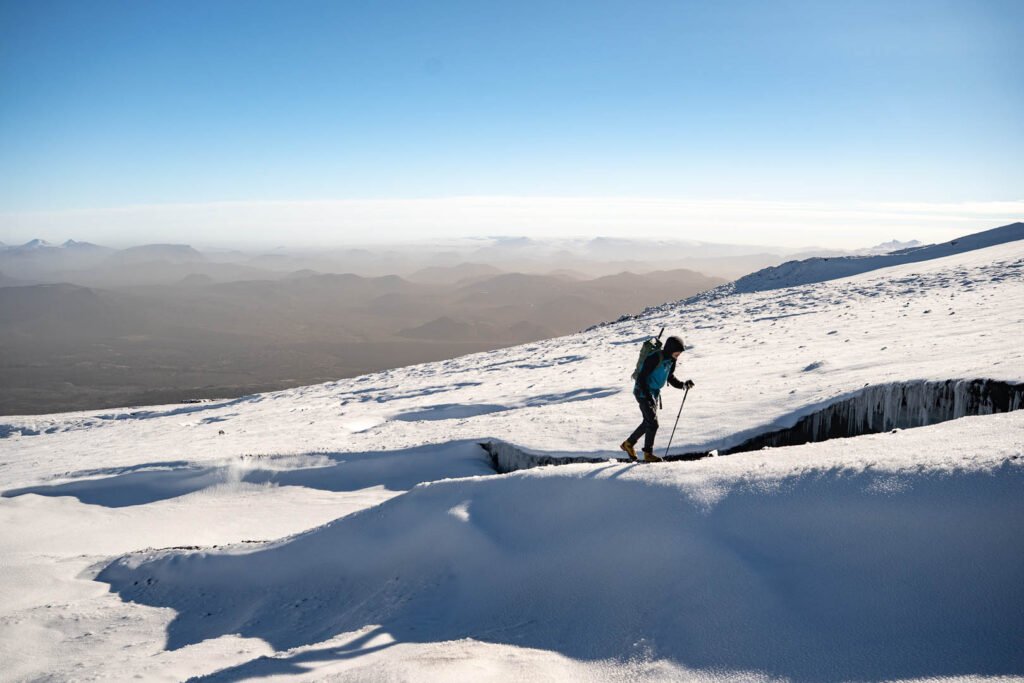
- you want to step onto a glacier or into an ice cave. That always needs a certified guide with crampons, a rope and a plan for crevasses, whatever your driving skills;
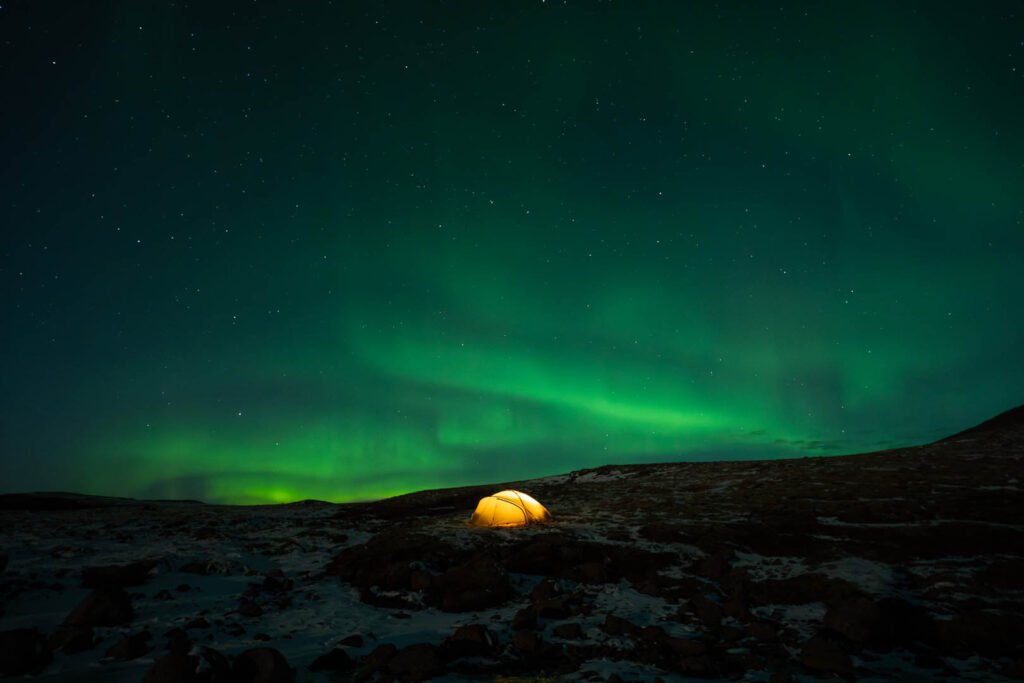
- you want the northern lights without driving dark, icy roads at 1 a.m. after a long day.
Winter with Zimno
- Private Northern Lights Tour with Photographer: about 4 hours from Reykjavík, September to April, only on nights with a good forecast. From 159,000 ISK.
- Private Golden Circle Tour: Þingvellir, Geysir, Gullfoss and Kerið, 8 hours, with a guide who knows when to turn back. From 169,000 ISK.
- Private South Coast Tour: Seljalandsfoss, Skógafoss, Reynisfjara and Vík, 10 hours. From 179,000 ISK.
- Tailored Private Tour: your own plan for up to 7 people, adjusted to the weather on the day. From 189,000 ISK.
Every tour can be guided in English or in Polish. See all our tours.
Before you go: a 1-minute checklist
- Check umferdin.is (or call 1777) and the wind on vedur.is the evening before and in the morning
- Ask the rental company: winter tyres, studs, and what the insurance does not cover (doors, gravel, sand)
- Start long drives at first light and fill the tank before you leave town
- Headlights on, phone in a holder, hands-free only
- Slow down before gravel, bridges and blind hills
- Open doors with both hands; park facing into the wind
- Leave a travel plan on safetravel.is; emergency number 112
- Turn back at a closed-road sign, every time
Fines at a glance
| Offence | Fine (ISK) |
|---|---|
| 96–100 km/h on a 90 road | 20,000 |
| 101–110 km/h on a 90 road | 50,000 |
| 111–120 km/h on a 90 road | 80,000 |
| 121–130 km/h on a 90 road | 120,000 |
| 66–70 km/h in a 50 zone | 30,000 |
| Phone in hand while driving | 40,000 |
| Headlights off | 20,000 |
| Seatbelt not worn (per person) | 20,000 |
| Ignoring a road closure | 20,000, and no insurance cover |
| Driving off-road | About 100,000–500,000 (criminal offence) |
FAQ
Is it safe to drive in Iceland in winter?
For an experienced winter driver, the Ring Road near Reykjavík, the Golden Circle and the South Coast are usually fine on calm days. The risk comes from wind, ice on gravel, darkness and closed roads, so check umferdin.is and vedur.is every morning and be ready to change plans.
Do I need a 4×4 to drive in Iceland in winter?
Not for the main routes; good winter tyres matter more. A 4×4 helps on snowy side roads and hills, but it doesn’t stop faster on ice. F-roads to the highlands are closed in winter for all cars.
Are studded tyres allowed in Iceland?
Yes, from 1 November to 15 April. Rental cars have winter tyres in winter; ask whether yours are studded.
How much is a speeding fine in Iceland?
On a 90 km/h road, 20,000 ISK for 96–100 km/h, 50,000 ISK for 101–110 km/h and 80,000 ISK for 111–120 km/h. Paying within 30 days usually gives 25% off. Rental companies add a handling fee.
Who goes first on a single-lane bridge?
The car closest to the bridge. If the other car will clearly get there first, stop in a safe spot before the bridge and wait.
Where can I check if a road is closed?
On umferdin.is, the Icelandic Road Administration’s live map, or by calling 1777. Weather warnings are on vedur.is and safety alerts on safetravel.is.
How many hours of daylight are there in winter?
In Reykjavík about 5.5 hours in late November and about 4 hours around 21 December, when the sun rises at about 11:22 and sets at about 15:29.